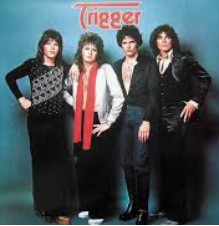
One 1978 commercial release on Casablanca, from the Jersey Shore.
Tom Nigra:
https://www.tapatalk.com/groups/starzfanzcentral/tom-nigra-passed-away-january-23-2011-t3860.html
Richie House: https://youtu.be/b7TcixxqKL8?si=d58YbOh6z2PJC8IU
Jimmy Duggan: https://www.tapatalk.com/groups/starzfanzcentral/remembering-jimmy-duggan-t2313.html
Derek Remmington: https://www.instagram.com/p/DNdidh3t_ji/
Trigger Facebook Page: https://www.facebook.com/groups/50195521929
A Trigger Commercial!!!!: https://youtu.be/pR9jrJ6L2NU?si=f9qodr2eNG8B75qa
Trigger Treats: https://www.youtube.com/watch?v=yn0nrE1QFSw
Trigger 1987: https://youtu.be/J9DhL15imhU?si=cobrU3Rzc7z1WpbQ
Story about the “Second Round” record: https://www.theaquarian.com/2025/06/30/its-their-story-play-it-loud-triggers-second-round/
Walk This Way: https://www.youtube.com/watch?v=4c8O2n1Gfto
Casablanca: https://www.bsnpubs.com/casablanca/casablancastory.html
The Mothership: https://nmaahc.si.edu/explore/stories/mothership-gift-love-planet
Mothership History: https://www.nytimes.com/2026/03/12/arts/music/p-funk-mothership-george-clinton.html
Feels Like the First Time: https://youtu.be/CK6jKL2qWxo?si=zvVAsfJB7jJQNScJ
YouTube Video Link: https://youtu.be/4Q7vx5GAbzI
Trigger 1978
This is the Tale of Trigger[pic], or What Happens to Your Rock Band if You’re Signed to Casablanca and You’re not KISS.
Trigger was originally a five-piece band put together by drummer Derek Remmington [pic] and keyboardist Tom Ayers[pic], who were playing in cover bands along the Jersey Shore. They wanted to do something that wasn’t just covers, but that’s what was popular along the Shore. Bands with a lot of original songs just didn’t get the gigs. Undeterred, Derek and Tom recruited guitarists Richie House[pic] and Jim Duggan[pic], as well as bassist Tom Nigra[pic] and they began writing and rehearsing original material.
They were pretty popular, regularly playing different clubs all along the Jersey Shore. They even make a commercial! Then Tom left Trigger to play in a band with Steve Knight from Mountain[pic]. Deciding not to replace the keyboardist, 4-piece Trigger then put out a shittily recorded self-release called, “Trigger Treat.” [pic]
There is a lot wrong with this record. The songs are anemic and sort of all over the place; We’re the Coral Reefer Band! Now we’re Grand Funk[pic], now we’re the Doobie Brothers, this is our Slade[pic] impersonation. The drums are like a little kid’s play set, the vocals may as well have been recorded in a cave, and I don’t know who or what to blame for the guitars.
What is interesting is their song, “Somebody Like You.” Its buried in the middle of this 1975 record, but a harder version opens their 1978 Casablanca release. I heard the 1975 version after hearing the 1978 one, and as different as they are, I like them both, but I like the Raspberries.
Trigger Treat got some local airplay and helped them get more gigs. It also helped Richie House start a conversation with Corky Stasiak[pic]. At the time, Stasiak was working as an engineer at Record Plant Studios with Denis Farrente[pic], between the two, their roster included Lou Reed, KISS, Alice Cooper, Aerosmith, and ….the Raspberries.
Anyway, working with Corky and Denis’ production company, Trigger began narrowing their musical focus. They spent a lot of time doing covers to keep the Jersey Shore club owners and patrons happy. So it is understandable that finding their own sound was difficult, having two sets of experienced ears only benefited Trigger. Armed with new and better demos, Corky and Denis flew to LA and got the band a deal with Casablanca Records[pic].
Casablanca was run by Larry Harris[pic] and Neil Bogart[pic]. Neil and Larry cut their teeth at Buddah[pic], a label known for singles, mostly bubblegum.[pic] “Yummy, Yummy, Yummy,” “Simon Sez,” “Green Tambourine,” “The Rapper,” “Brother Louie”…all hits for Buddah before Bogart and Harris left in 1974.
Bogart’s reputation was based on knowing what was going to be a hit and he was good at it. His confidence and bravado was fueled by experience, ego, and massive amounts of cocaine.[pic] But the biggest names at Casablanca, Parliament and KISS weren’t doing a whole lot on the charts, and as early as 1975, Casablanca started hemorrhaging money. But that didn’t stop the over-the-top culture that was synonymous with the label.
Bogart was the one who thought building a levitating MotherShip[pic] for George Clinton’s concert entrances was a good idea. I mean, long-term, sure it was, and one MotherShip has been in the Smithsonian since 2011. But financially, that was a questionable choice. A cash-strapped Casablanca had to get a $1,000,000 loan to have it made. To put it in perspective, it is just over $6million in 2026.
KISS’ first couple of Casablanca releases didn’t do much to pay the company bills, but because of their live shows, the KISS Army[pic] was growing. And Bogart had zero problem investing in the theatrics; flash paper, an elevating drum riser that threw sparks, Ace’s guitar would burst into flames during a solo, Gene was spitting blood and breathing fire, and there were explosions everywhere. At the time, no one saw anything like it, and it fueled KISS’ reputation. It was their 1975, KISS ALIVE[pic], that helped salvage Casablanca’s bottom line.
A couple of months later, the label signed a popular Eurodisco singer named Donna Summer. Bogart’s decision was based on one song, a song he couldn’t stop playing, the[pic] Giorgio Moroder produced, “Love to Love.” But, being Neil Bogart, he had to add his over-the-top touch. So he had Moroder mix a longer, 16 minute version which Casablanca distributed to club djs. This version, now renamed [pic] “Love to Love You, Baby” is considered the first disco 12’. Radio stations got the much shorter 3 minute version, but that was enough. In early 1976, the song went to #2 and sealed Donna Summer’s legacy as the Queen of Disco.
Then in 1977, Robert Stigwood’s “Saturday Night Fever”[pic] came out and well, we all know what happened. Not to be outdone, Bogart created Casablanca FilmWorks and followed the Bee Gees-filled “Fever” into the theater with his own disco movie, “Thank God Its Friday,” soundtrack first. [pic]While not as big of a cultural influence as “Saturday Night Fever”, “Thank God Its Friday” would eventually earn a Grammy and an Oscar for Donna Summer’s song, “Last Dance.”
It is in this 1977, cocaine-fueled, bigger-is-better, disco-driven PR machine that our young rock lads from Jersey were greeted and then forgotten.
Would the record[pic] have charted with backing? Eeeeh, I mean, no.
Even at their best, and these are some fine musicians, their experience playing covers leaves them sounding like other bands, a lot. The reworked “Somebody Like You” and “Don’t Stop Your Love” have The Raspberries[pic] footprint all over them. “Rockin “Cross the USA” borrows from Dave Edmunds’[pic] “I Knew the Bride” and “Deadly Weapon” and “Gimme Your Love” might as well be Aerosmith[pic] covers. If you don’t believe me, listen to “Gimme Your Love” and then listen to “Walk This Way” and you’ll see what I mean.
It’s not a terrible record, but a constantly money-troubled Casablanca knew they had to support their disco golden goose even as the genre went into death throes.
Trigger went home and basically picked up where they left off, playing clubs along the Jersey Shore. Their line up changed over the years, even adding a female singer in the early 80s when Pat Benatar[pic] was big but their glory days, if you will, were behind them. Jimmy Duggan passed away in 2001, and Tom Nigra ten years later. In 2025, Trigger’s last original members, Derek Remmington and Richie House[pic] released “Second Round” which featured the material Casablanca never put out. Remington also wrote a book about the whole experience called, “When the Last Song Ends.”
The Tale of Trigger really reads like a Thomas Hardy novel. Before Casablanca signed the band, Atlantic Records then-publicist, John Kalodner saw a Trigger show and wasn’t impressed. The following day, he spotted a demo tape in Jerry Greenberg’s “out” box labeled “Trigger.” Wondering if he was too harsh, Kalodner decided to give it a listen. But it wasn’t THAT Trigger. It was a rough cut of a song called “Feels Like the First Time.” Atlantic signed that band, and then changed their name to Foreigner.[pic]
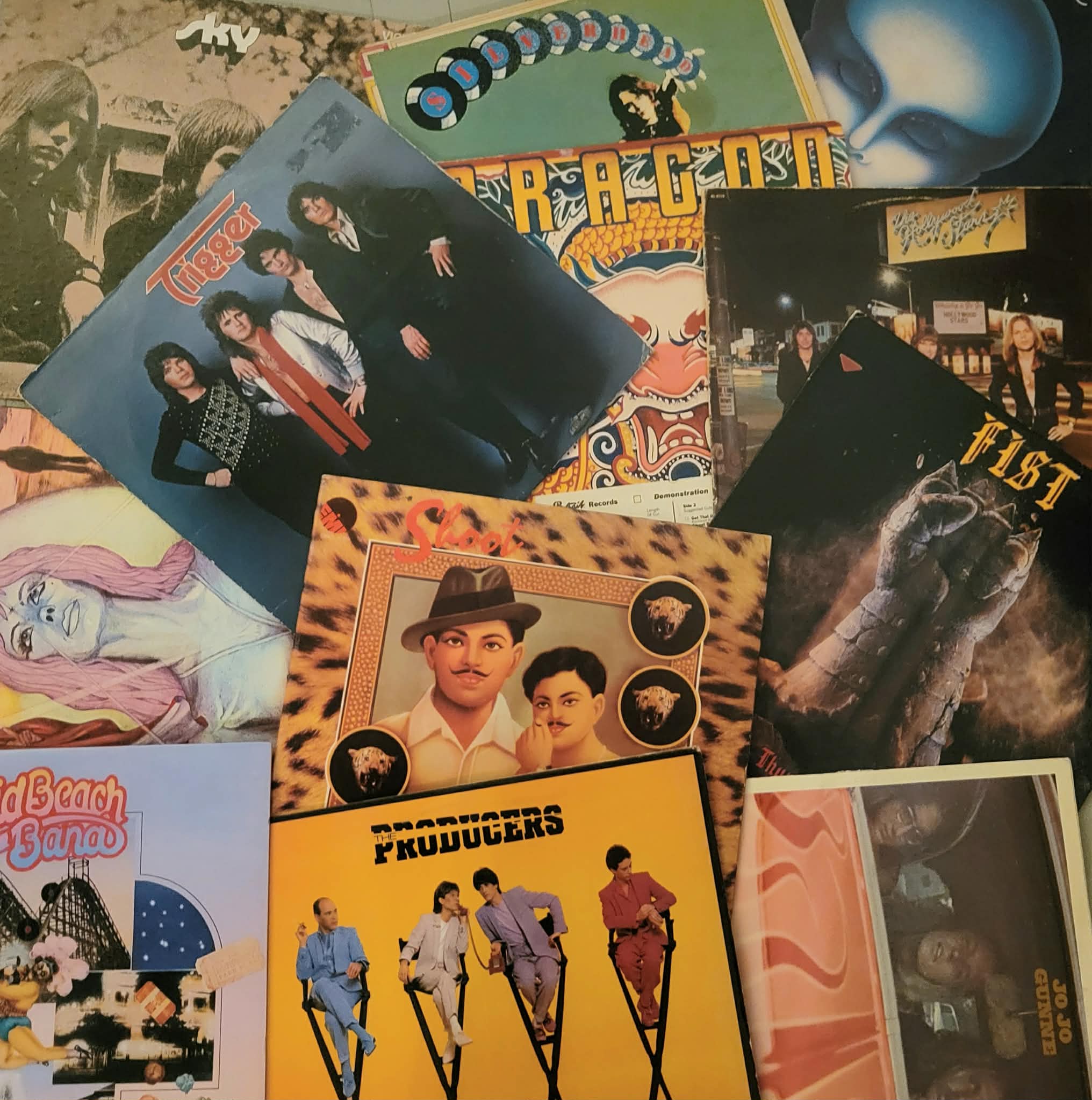
You should be able to find Trigger’s Casablanca release in the cheaps, the other two were self released and probably easier to find in New Jersey and New York. I have links to all three, and other stuff at BandsoftheLost.com. If you’d like to hear about other records you may or may not have had back in the day, you can subscribe to Bands of the Lost YouTube channel or check us out at BandsoftheLost.com.
Happy Digging
 using WordPress and
Comments are closed